
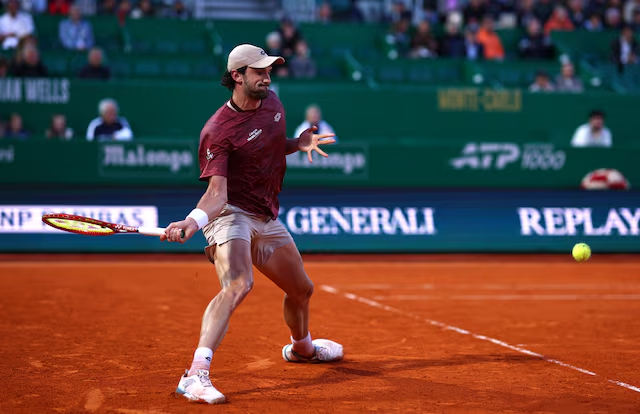
In a tournament often dominated by the sport’s elite, one of the most compelling stories of the 2026 clay-court season is unfolding in dramatic fashion. Local wildcard Valentin Vacherot delivered a stunning performance at the Monte-Carlo Masters, defeating rising star Lorenzo Musetti in what is already being described as one of the tournament’s defining moments.
For Vacherot, this was more than just a victory — it was a career-defining breakthrough on one of tennis’s most prestigious stages.
A Night Monte Carlo Won’t Forget
Competing in front of a home crowd that rarely gets to celebrate local success at this level, Vacherot rose to the occasion with composure and tactical precision. From the opening games, he displayed a level of confidence that belied his ranking, taking control of rallies and forcing Musetti into uncomfortable positions on the clay.
The atmosphere inside the Monte Carlo Country Club quickly transformed into something electric. Each point won by the underdog amplified the crowd’s belief, turning the match into a high-intensity spectacle fueled by emotion, national pride, and sporting drama.
Musetti, widely regarded as one of the most naturally gifted players on clay, struggled to impose his rhythm. His signature one-handed backhand flashes appeared only in moments, as Vacherot consistently disrupted his timing with aggressive shot selection and relentless court coverage.
Tactical Discipline Over Talent
What made Vacherot’s victory particularly striking was not just the result, but how it was achieved.
Rather than relying on risky shot-making, he built points with patience — using depth, variation, and smart positioning to neutralize Musetti’s creativity. Analysts pointed to his ability to:
- Control baseline exchanges
- Target Musetti’s weaker defensive zones
- Maintain high first-serve consistency
- Stay mentally composed under pressure
These elements are often associated with seasoned top-20 players, not a wildcard entrant facing one of the tour’s most technically skilled opponents.
This performance is already being discussed in sports analytics circles, where data-driven breakdowns highlight Vacherot’s efficiency in converting key break points and minimizing unforced errors — critical metrics in modern tennis performance evaluation.
The Underdog Effect and Global Engagement
Vacherot’s victory is more than a sporting upset — it represents a powerful narrative that resonates across the global tennis audience.
Underdog stories like this are among the most valuable assets in today’s sports ecosystem. They drive:
- Massive spikes in live streaming viewership
- Increased interaction across social media platforms
- Higher engagement in sports betting markets
- Expanded reach for tournament sponsors and broadcasters
Within minutes of the match’s conclusion, highlights of the upset began circulating widely, attracting attention from fans, analysts, and commercial stakeholders alike.
A Turning Point for a Career — and a Market
For Vacherot, this win could mark the beginning of a new chapter. Breaking through at an ATP Masters 1000 event not only boosts ranking points but also elevates visibility in a highly competitive global market.
Opportunities that often follow such performances include:
- Sponsorship deals with sports apparel and equipment brands
- Invitations to higher-tier tournaments
- Increased media coverage and fan base growth
- Long-term positioning within the ATP competitive structure
For Monaco — a nation not traditionally known for producing top tennis talent — this moment carries symbolic weight, potentially inspiring a new generation of players and attracting investment into local tennis development.
Musetti’s Setback Raises Questions
While the spotlight rightly shines on Vacherot, the result also raises important questions for Musetti.
The Italian star entered the tournament with strong expectations, particularly on clay, a surface that complements his playing style. However, this defeat highlights ongoing challenges:
- Inconsistency under pressure
- Difficulty adapting to unconventional opponents
- Mental resilience in hostile environments
For top players, early-round exits in Masters events can have ripple effects — not only on rankings but also on confidence heading into the remainder of the clay season, including Roland Garros.
Monte Carlo as a Stage for Transformation
The Monte Carlo Masters has long been known as a tournament where narratives shift and new contenders emerge. Played on one of the most demanding surfaces in tennis, it often reveals which players are prepared to adapt, endure, and evolve.
This year, Vacherot’s breakthrough adds a fresh storyline to the 2026 season — one that underscores the increasing depth and unpredictability of the ATP Tour.
The Bigger Picture: Tennis in Transition
This result reflects a broader transformation within professional tennis:
- The gap between top-ranked players and outsiders is narrowing
- Tactical intelligence is becoming as important as raw talent
- Fan engagement is increasingly driven by unexpected outcomes
For broadcasters, sponsors, and digital platforms, matches like this are gold. They combine drama, authenticity, and emotional connection — the core ingredients of modern sports entertainment. (reuters)