The career of Cristiano Ronaldo is often measured in records, trophies, and unmatched longevity at the top of world football. But beyond the numbers lies a different story — one built on heartbreak, frustration, and defining moments of vulnerability that helped shape one of the greatest competitors in history.
Looking across key episodes documented by major international outlets, a clear pattern emerges: Ronaldo doesn’t just lose — he feels every defeat deeply. And that emotional intensity has become one of the driving forces behind his relentless pursuit of greatness.
The first major crack appeared early. In the UEFA Euro 2004 Final, played on home soil, a teenage Ronaldo was left in tears after Portugal’s shocking defeat to Greece. At just 19, the image of him crying on the pitch became iconic. It wasn’t just disappointment — it was the beginning of a mindset that would define his entire career.
More than a decade later, as captain and global superstar, he faced another emotional breaking point. During the UEFA Euro 2016 Final, Ronaldo was forced off early due to injury. Watching from the sidelines in tears, he experienced one of the most helpless moments of his career. Portugal went on to win, but his reaction exposed a deeper truth: even at the highest level, not being able to influence the outcome can be devastating.
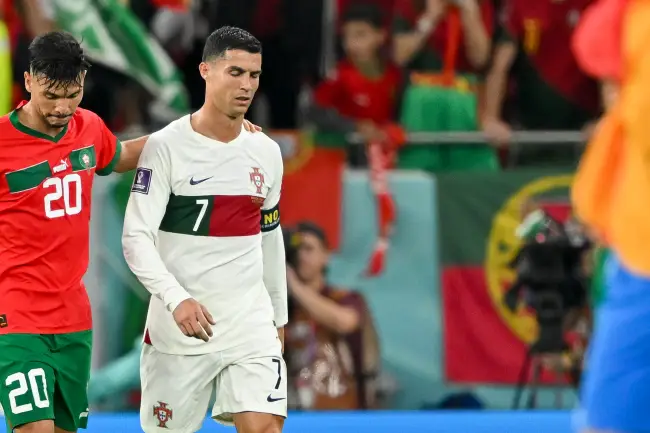
If there is one moment that truly encapsulates his pain, it came at the FIFA World Cup 2022. Portugal’s elimination against Morocco marked what is widely seen as Ronaldo’s final World Cup appearance. As he walked down the tunnel alone, in tears, the image resonated globally. It wasn’t just a loss — it was the closing chapter of a lifelong pursuit that never reached completion.
Even in the later stages of his career, now with Al-Nassr, the emotional fire remains unchanged. After losing the King’s Cup final, Ronaldo was again seen visibly devastated. The reaction made one thing clear: success hasn’t numbed his hunger — if anything, it has intensified it.
Another recent example came during the UEFA Euro 2024, when he missed a crucial penalty. Overcome with emotion, he broke down during the match, only to later redeem himself. That cycle — failure, emotion, response — has become a defining trait of his career.
Not all of his struggles happened on the pitch. His second stint at Manchester United exposed internal conflicts, public criticism, and a rare period of instability. It was one of the few times where the narrative of total control over his career seemed to slip, revealing a more human side of the superstar.
What connects all these moments is simple but powerful: Ronaldo refuses to normalize defeat. Where others move on, he internalizes. Where others accept, he reacts. And from that reaction, he rebuilds.
This emotional dimension — often overlooked in statistical debates — may be the true foundation of his success. Talent and discipline matter, but it is his refusal to accept failure quietly that sets him apart.
In the end, Cristiano Ronaldo’s tears tell a story that numbers never could. A story of pressure, obsession, and an unyielding desire to win.
Because for him, losing has never been just part of the game — it has always been personal. (paulo nhambo)