

The momentum of the ICC Men’s T20 World Cup 2026 shifted dramatically this week after a commanding performance from the South Africa national cricket team, who defeated the India national cricket team by 76 runs in a decisive Super Eight encounter.
The result not only strengthened South Africa’s semifinal ambitions but also placed India under significant pressure in one of the tournament’s most competitive groups.
A Statement Victory on the Big Stage
From the first over, South Africa displayed tactical clarity and composure. Winning the toss and opting to bat first, they built a disciplined innings anchored by controlled aggression rather than reckless stroke play.
The Proteas posted a formidable total above 180 runs, blending calculated boundary hitting with smart strike rotation. Their middle order proved especially effective, capitalizing on India’s inconsistent death bowling. A late surge in the final overs added crucial runs that ultimately widened the psychological gap between the two sides.
India, often known for their batting depth and explosive top order, struggled early in the chase. Quick wickets in the powerplay disrupted momentum and forced a more cautious approach, which proved costly given the required run rate.
Tactical Discipline Defines the Match
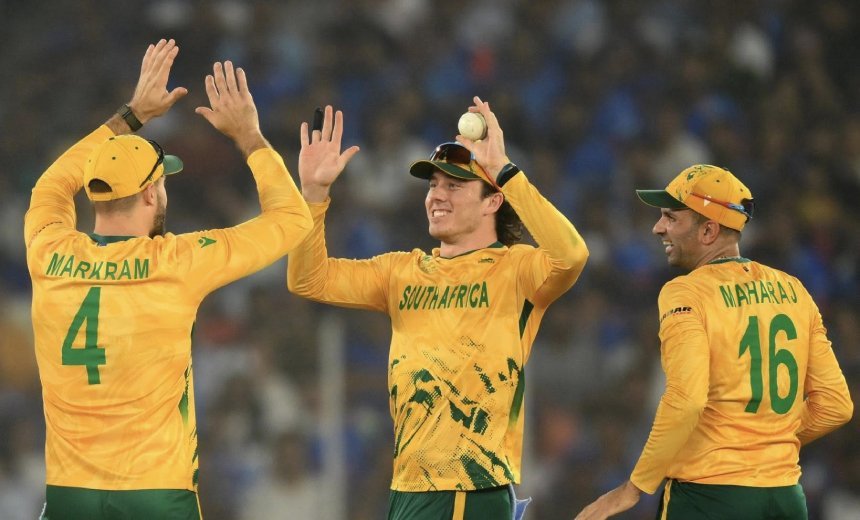
South Africa’s bowling unit executed a near-flawless defensive strategy. Seamers maintained disciplined line and length, extracting bounce and variation, while spinners controlled the middle overs with tight field placements.
Key turning points included:
- Early dismissal of India’s top-order anchor
- A middle-overs collapse triggered by spin pressure
- Sharp fielding that converted half-chances into decisive breakthroughs
India’s batting lineup, typically dominant in global tournaments, appeared unsettled by the relentless pressure. Attempts to accelerate resulted in mistimed shots and soft dismissals, widening the margin of defeat.
What This Means for the Tournament
This victory dramatically reshapes the Super Eight standings. South Africa now emerge as serious title contenders, showcasing balance in all departments — batting depth, bowling versatility, and fielding sharpness.
For India, the heavy defeat complicates qualification scenarios. Net run rate could now become a decisive factor, meaning future matches must be won convincingly rather than narrowly.
Beyond the numbers, the psychological impact is substantial. A 76-run defeat in a high-stakes stage signals vulnerabilities that opponents will analyze closely.
Leadership and Composure
South Africa’s captain demonstrated tactical maturity, rotating bowlers strategically and maintaining attacking fields even when India attempted to rebuild. The team’s body language reflected confidence and unity — attributes often critical in knockout-stage tournaments.
India’s leadership, meanwhile, faces urgent questions about adaptability under pressure. Selection balance, bowling rotations, and middle-order consistency may now come under scrutiny as the tournament intensifies.
Rising African Momentum in Global Cricket
This performance also carries broader continental significance. South Africa’s dominance underscores Africa’s growing competitiveness in international cricket, reinforcing its ability to challenge traditional powerhouses on the world stage.
In a tournament defined by slim margins and explosive performances, this clash may be remembered as a defining moment — one where South Africa transitioned from contenders to genuine favorites. (futnews24)