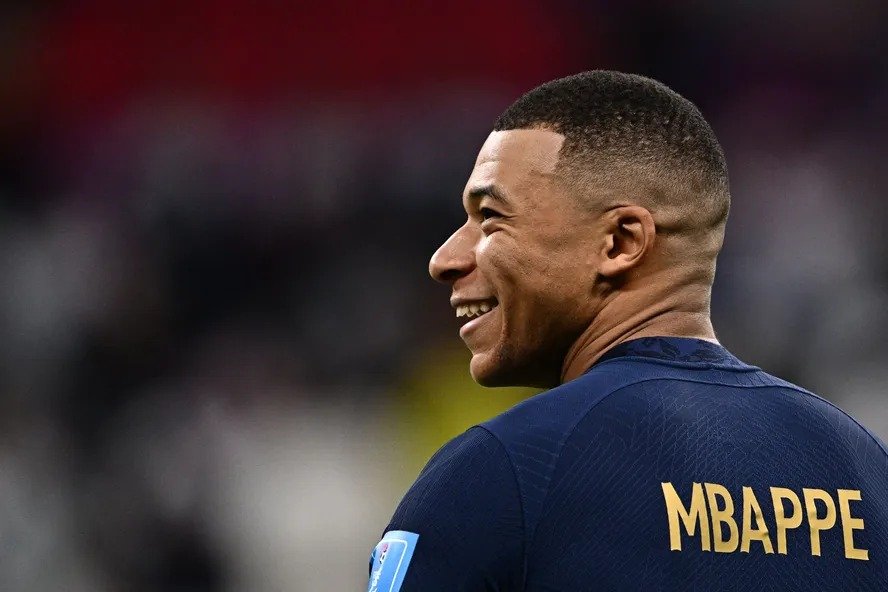
Cristiano Ronaldo, Luís Figo and Gerd Müller all lifted football’s biggest individual prize despite finishing the year without winning a major collective title. The precedent could keep Kylian Mbappé firmly in the 2026 Ballon d’Or race.
As the debate surrounding the 2026 Ballon d’Or intensifies, one argument has gained traction across European media: Does a player need to win a major team trophy to claim football’s most prestigious individual award?
According to reports highlighted by L’Équipe, the answer is no. History shows that several Ballon d’Or winners have earned the award primarily because of extraordinary individual performances, even after ending the season without lifting a major club or international trophy.
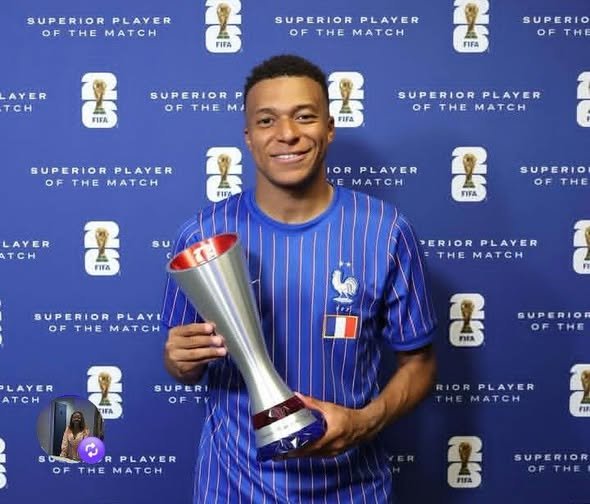
That historical precedent has reignited discussions over Kylian Mbappé’s chances this year.
Cristiano Ronaldo (2013): The Best Example
Perhaps the strongest comparison is Cristiano Ronaldo’s 2013 Ballon d’Or.
Despite Real Madrid finishing the year without winning La Liga, the UEFA Champions League or the Copa del Rey, Ronaldo produced one of the greatest individual seasons of his career.
He finished the calendar year with remarkable goal-scoring numbers and carried Portugal to the 2014 FIFA World Cup through an unforgettable play-off performance against Sweden, including a famous hat-trick in Stockholm. Those performances convinced voters to award him the Ballon d’Or ahead of Franck Ribéry and Lionel Messi.
His victory remains one of the clearest examples that individual excellence can outweigh collective silverware.
Luís Figo (2000): Winning Through Individual Brilliance
Another notable precedent is Luís Figo.
The Portuguese legend won the 2000 Ballon d’Or despite not collecting a major team trophy during that year.
Although France had won Euro 2000 and Zinedine Zidane was widely considered the favourite, Figo’s consistency, influence and spectacular performances for Barcelona and later Real Madrid earned him enough votes to secure football’s biggest individual honour.
His victory remains one of the closest Ballon d’Or races in history.
Gerd Müller (1970): Goals Over Silverware
The same happened decades earlier.
German striker Gerd Müller received the 1970 Ballon d’Or after an extraordinary year in front of goal.
Although Bayern Munich did not win Europe’s biggest trophies that year, Müller’s incredible scoring record and outstanding performances for West Germany were enough for journalists to crown him Europe’s best footballer.
His triumph demonstrated that exceptional individual impact has always been a decisive factor in Ballon d’Or voting.
What Does This Mean for Mbappé?
This historical context is why many analysts believe Kylian Mbappé should not be ruled out of the 2026 Ballon d’Or race, even if his season lacks the biggest collective titles.
Throughout the year, Mbappé has continued to produce elite individual numbers, remaining one of world football’s most decisive attackers. His goal-scoring ability, consistency in high-profile matches and individual influence could weigh heavily when journalists cast their votes.
Former Ballon d’Or winner Luís Figo himself recently suggested that Mbappé remains among the contenders, while stressing that performances across the entire season remain the decisive factor.
Ballon d’Or Has Never Been Only About Trophies
Although winning competitions such as the Champions League, domestic leagues or the World Cup often strengthens a player’s candidacy, Ballon d’Or history shows there is no absolute rule requiring collective silverware.
The award has repeatedly recognised players whose individual brilliance transcended their team’s achievements.
That is exactly why comparisons between Cristiano Ronaldo (2013) and Kylian Mbappé (2026) continue to dominate football discussions.
If Mbappé’s individual performances are judged to be superior to those of his rivals, history suggests that lifting the Ballon d’Or without a major team trophy is entirely possible.
Verdict: The claim is largely true. Cristiano Ronaldo (2013), Luís Figo (2000) and Gerd Müller (1970) are genuine historical examples showing that the Ballon d’Or can be won without securing a major collective trophy, meaning Mbappé’s hopes remain alive despite his team’s results. (Futnews24)