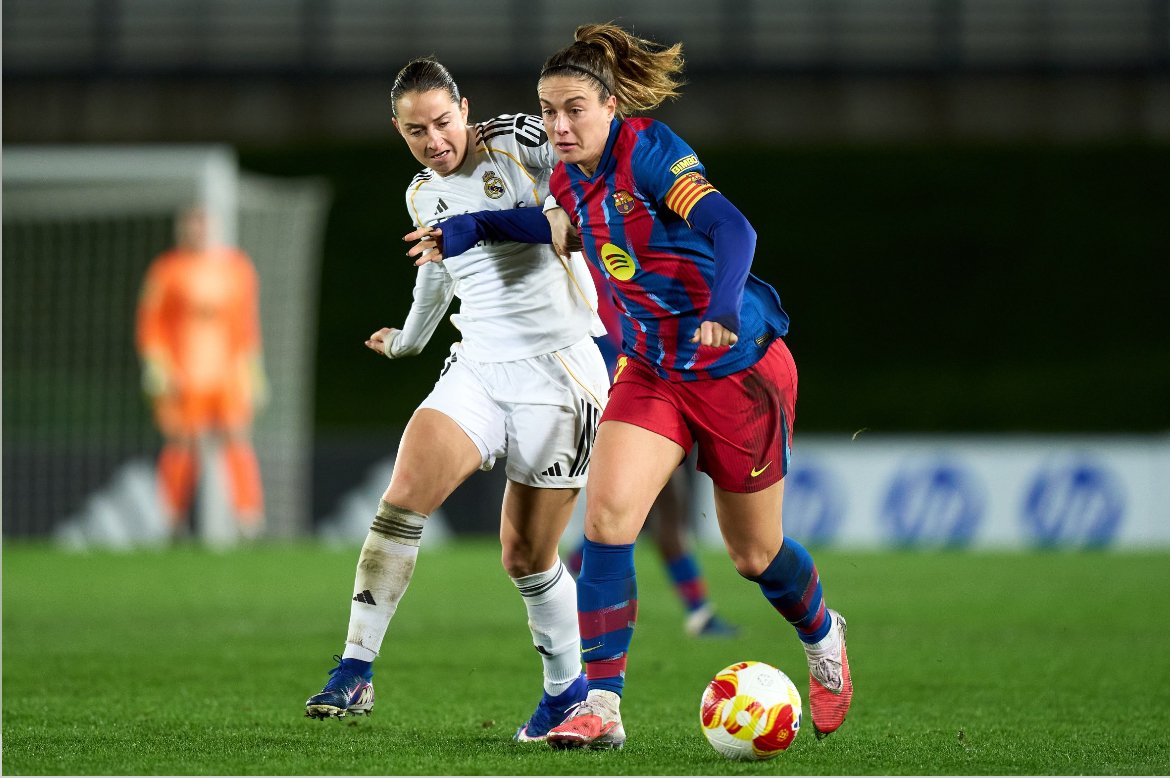
FC Barcelona Femení delivered one of the most dominant performances in recent European women’s football history, routing domestic rivals Real Madrid Femenino 6–0 on aggregate to reach the UEFA Women’s Champions League semi‑finals, a milestone that reshapes perceptions of competitiveness, investment and tactical innovation in the women’s game.
The two‑leg encounter, capped by an overwhelming showing at Spotify Camp Nou, wasn’t just a win — it was a statement. In front of tens of thousands of supporters, Barcelona’s team played with precision and control unmatched by Real Madrid, whose defense could not contain the relentless attacks that exposed gaps across the pitch. Captain Alexia Putellas celebrated her 500th appearance for the club, adding emotional heft to an already emphatic victory.
What makes this result noteworthy isn’t merely the scoreline but what it symbolizes for the women’s game in Europe: the gap between elite teams is growing wider, and Barcelona stands at the center of that growth. Over the past decade, Barcelona’s women’s squad has clinched multiple domestic titles and previous Champions League trophies, but this performance — over one of the sport’s most resourced rivals — highlights how strategic investment and long‑term planning are beginning to pay dividends on the biggest stage.
Experts watching the match pointed to several tactical components that contributed to Barcelona’s dominance. Unlike Real Madrid, whose game plan relied on quicker transitions and counterattacks, Barcelona maintained high possession, fluid positional rotation, and aggressive off‑ball movement that consistently opened defensive spaces. The result was a display of attacking football that didn’t relent from kickoff to final whistle, a stark contrast to Real Madrid’s disjointed responsiveness.
Inside the Barcelona locker room after the match, head coach Jonatan Giráldez praised his squad’s mental focus and depth. “Today was the result of years of development,” Giráldez said. “We’ve built a team that understands not just how to win, but how to dominate, how to adapt and how to impose our identity on any opponent in Europe.” While statistical data capturing expected goals, pass completion rates, and defensive interceptions has yet to be fully published, early analytics reveal Barcelona’s performance far exceeded historical averages for continental knockout matches.
These developments arrive at a pivotal time for women’s football globally. As more leagues expand, broadcasting deals increase, and corporate sponsorship interest grows, the sport is rapidly transitioning from a niche attraction to a lucrative global product. Barcelona’s continued success on this stage illustrates that clubs who commit resources — both in talent recruitment and in developing youth pipelines — are beginning to reap competitive advantages that echo in attendance figures and international brand growth.
However, this dominance also raises questions about competitive balance across European competition. Analysts warn that if economic and tactical disparities widen further, the Champions League could risk turning into a predictable arena where a handful of elite teams monopolize success. Such an imbalance might dampen the allure of competition for fans and sponsors seeking dramatic narratives and underdog breakthroughs — narratives that historically have helped grow women’s football.
From a cultural standpoint, the impact of Putellas’ 500th match cannot be understated. In a sport still navigating issues of recognition and gender parity, milestones like this fuel conversations about legacy, opportunity and the prominence of women’s athletes in mainstream media. Young players across Spain and Europe see role models not only scoring goals but shaping sporting culture on and off the pitch — a dynamic that transforms aspirations into achievements.
Looking ahead to the Champions League semi‑finals, Barcelona will face another European powerhouse, with team morale undoubtedly high but the coaching staff cautious about complacency. Tactical evolution from opponents — combined with Barcelona’s own hunger for continental supremacy — will determine whether this current generation can add another trophy to a growing cabinet rich with silverware.
In the broader context of sports in 2026, Barcelona’s emphatic victory represents a transformative moment — not just for one club, but for the competitive integrity and global visibility of women’s football. As fans, sponsors, and analysts scrutinize this season’s unfolding chapters, one reality has already become clear: Barcelona Femení isn’t simply winning — it’s rewriting the script for elite competition in the women’s game.
Fonte: Barca Blaugmanes
Relacioned:https://futnews24.com/tcu-commits-long-term-to-sonny-dykes-amid-rising-expectations-in-big-12/