As the NBA 2025‑26 season progresses toward its most decisive stretch, the narrative surrounding professional basketball in the United States is evolving in two major directions: emergence of breakthrough young talent and historic investments in next‑generation training infrastructure.
Two developments in particular — the standout performance of Harrison Ingram in the NBA G League, and the announcement of an unprecedented training facility by the Cleveland Cavaliers — reflect deeper strategic shifts in how teams cultivate talent, support athlete health, and prepare for future success both on and off the court.
Harrison Ingram: A Breakout Story in the G League
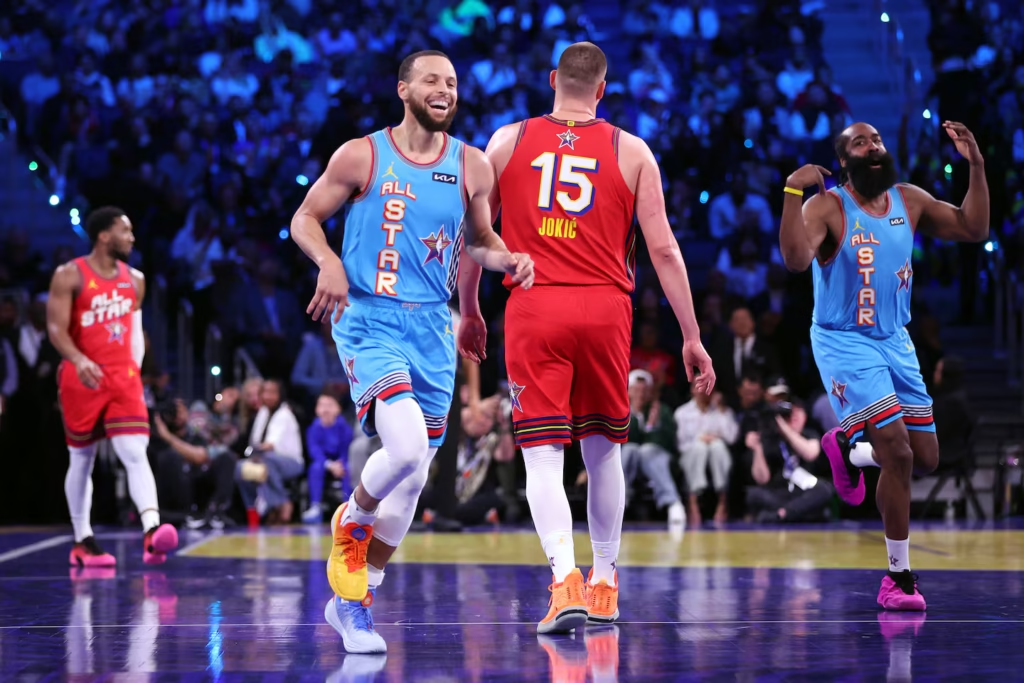
One of the more compelling stories of the 2026 season comes not from the bright lights of the NBA, but from its developmental arm: the NBA G League. There, Harrison Ingram, forward for the Austin Spurs, is making a powerful case that he belongs among the league’s rising talents.
During an exceptional stretch of games, Ingram earned G League Player of the Week honors, posting impressive all‑around numbers that signal both his versatility and his readiness for a larger professional role. Across a series of recent matchups, he averaged:
- 22.2 points per game
- 13.4 rebounds
- 7.4 assists
His week included a rare triple‑double, underscoring his impact across multiple facets of the game — scoring, playmaking and rebounding. Such versatility is increasingly valued in modern basketball, where positions blur and players are expected to contribute in more than one statistical category.
Analysts see Ingram’s rise as emblematic of a broader trend: the G League is no longer simply a minor league where prospects develop in isolation. Instead, it’s becoming a vibrant proving ground where players sharpen fundamental skills in a highly competitive environment and NBA franchises find impact players ready to step into major roles.
This evolution reflects a larger shift in league strategy: as NBA teams contend with injuries, international rotations and increasing parity, depth has become critically important. A player like Ingram — with his statistical breadth and dynamic presence — offers teams a potential multi‑dimensional boost that extends beyond traditional scoring roles.
Training Facilities as Competitive Advantage: Cleveland’s Ambitious Vision
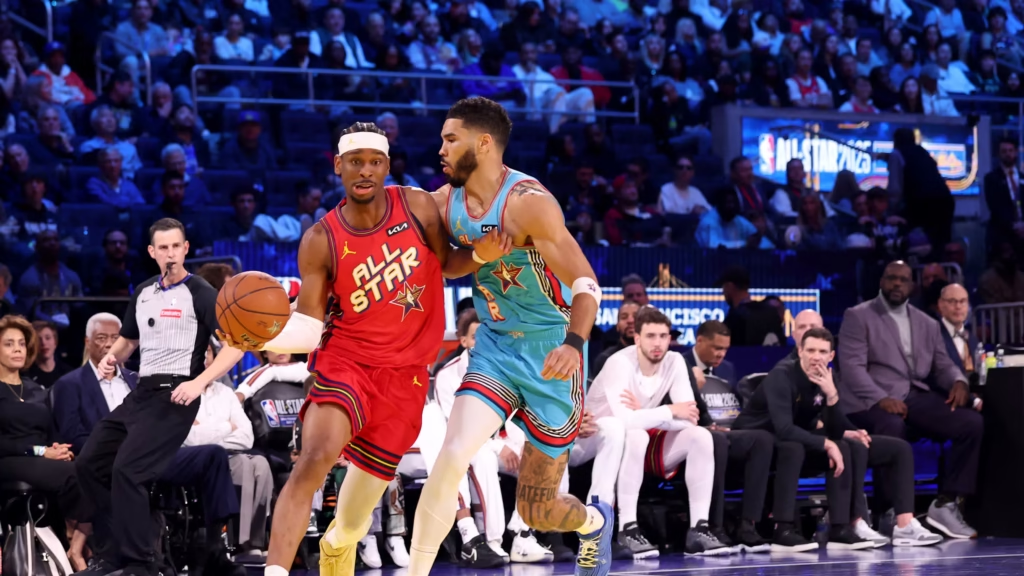
While individual player development garners headlines on the court, franchises are also making bold moves behind the scenes, investing in infrastructure that could redefine standards across professional sports.
The Cleveland Cavaliers recently announced plans for the Cleveland Clinic Global Peak Performance Center, a groundbreaking training campus that will be one of the largest indoor professional sports practice facilities in the United States. With more than 210,000 square feet of dedicated space for athletic performance, recovery, analytics and community engagement, the project represents a new model for how NBA teams approach comprehensive athlete support.
Planned features include:
- Multiple NBA‑regulation courts
- Advanced strength and conditioning spaces
- Sports medicine and physical therapy labs
- Hydrotherapy and recovery pools
- Nutritional and wellness programs
- Integrated data analytics and performance evaluation centers
The facility is designed to be more than a training site — it will serve as a holistic athlete ecosystem, supporting everything from injury prevention and rehabilitation to performance tracking, cognitive training and lifestyle health.
By investing at this scale, the Cavaliers are signaling a shift in franchise priorities: success today requires not only athletic talent, but also world‑class infrastructure that supports longevity, resilience and peak performance throughout the year.
Importantly, this campus will also benefit the broader community, with dedicated spaces for local youth programs and public health initiatives, connecting elite sport with grassroots participation.
What These Developments Mean for the NBA
Taken together, the emergence of players like Harrison Ingram and investment in cutting‑edge facilities reflect several deepening trends within professional basketball:
1. Player Development Is Becoming More Strategic and Scientific
No longer do players simply “wait for their chance.” With enhanced G League systems and greater integration between NBA clubs and their developmental affiliates, the league is building a pipeline that prioritizes readiness, adaptability and multi‑role versatility.
2. Health and Performance Innovation Is Central to Competitive Success
Teams are investing heavily in recovery technologies, sports science and injury prevention protocols. The Cleveland Clinic Performance Center is just one example of how franchises are approaching athlete health as a long‑term strategic priority rather than a short‑term fix.
3. The NBA’s Growth Is Linked to Broader Cultural and Economic Integration
Market growth in the NBA is no longer confined to ticket sales and broadcast rights. Facilities like the Cavaliers’ new campus — which incorporates community programming — reflect a broader role for teams as civic partners and social institutions.
4. Market Value and Team Identity Are Expanding
Teams that can offer state‑of‑the‑art resources, deep developmental talent pools, and proactive health strategies are not only competitive on the court — they are more attractive to sponsors, fans and potential free agents. The competitive landscape of the league is thus shaped by a combination of talent, infrastructure investment and organizational vision.
Looking Ahead: The Future of Basketball Performance
As the 2026 season continues, how teams leverage emerging talent and cutting‑edge facilities will be crucial to shaping playoff races, free agency movements and long‑term organizational success.
For Harrison Ingram, the G League is proving to be the perfect springboard toward a potential NBA breakout. For the Cavaliers, the investment in infrastructure may become a model for how elite sports organizations support athlete development in a holistic, 360‑degree manner.
Together, these developments point to a future where professional basketball is not defined solely by what happens on game night, but by how teams cultivate talent, build systems and innovate year‑round. (futnews24)
relacioned :https://futnews24.com/vince-williams-jr-out-for-the-season-what-it-means-for-the-utah-jazz-and-the-nba-landscape/