The iconic English club Manchester United has recently revealed its latest financial results, showing a notable turnaround to profitability — but also highlighting ongoing financial challenges as its total debt edges close to £1.3 billion. This dual reality underscores the complex economic pressures facing elite football clubs today.
📊 Profit Return Amid Cost Cutting
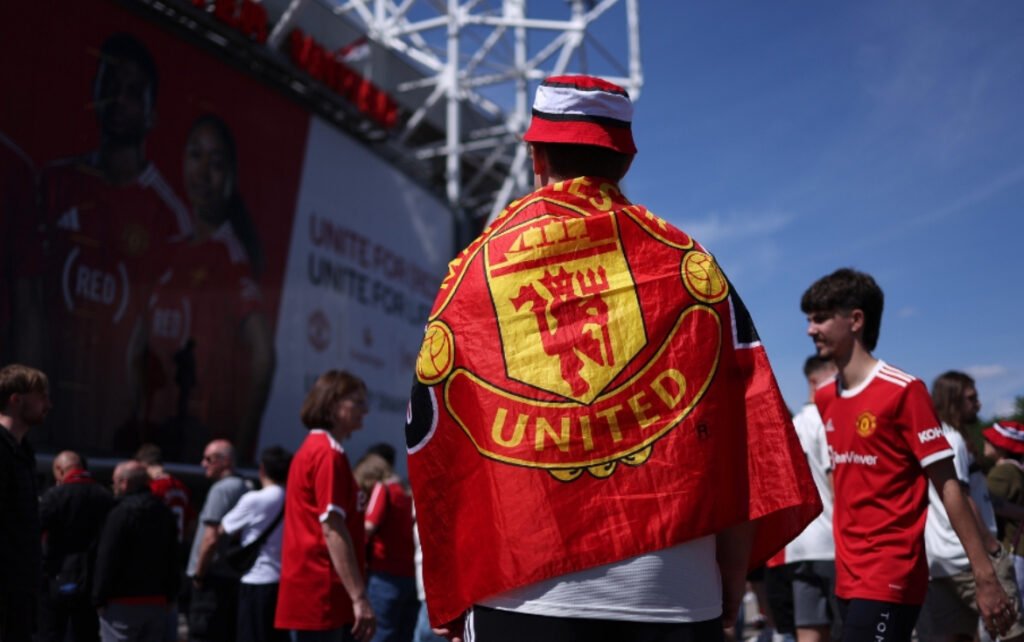
For the six‑month period ending 31 December 2025, Manchester United reported an operating profit of £32.6 million, a significant swing from a £3.9 million loss in the same period a year earlier.
Chief Executive Omar Berrada attributed the turnaround to the ongoing “off‑pitch transformation”, which includes widespread cost‑cutting measures introduced since investor Sir Jim Ratcliffe acquired a minority stake in early 2024. These measures have included multiple rounds of redundancies, cuts to staff benefits, and tighter control on wage expenses — contributing to a reduction in running costs and improved profitability.
💰 Debt Nears £1.3 Billion
Despite the profit, Manchester United’s total debt remains a major concern. The club drew down an additional £25 million on its revolving credit facility, bringing that portion of debt to £295.7 million, while historical obligations — including legacy borrowing from the controversial Glazer family takeover — combined with outstanding transfer liabilities now push United’s total obligations to approximately £1.29 billion.
More than £500 million of this figure is tied up in deferred transfer fee payments, a common yet often overlooked component of club finances that reflects deals where payments are spread over time.
📉 Revenue Trends and Challenges
The financial results also underline challenges in generating revenue:
- Total revenue for the reporting period was £190.3 million, down compared with the previous year.
- Commercial revenue declined by 8 %, partly linked to the end of a high‑profile kit sponsorship deal.
- Matchday income also saw a fall, attributed in part to fewer home fixtures.
At the same time, wage expenditure decreased by 9 % to £75.1 million, reflecting deliberate efforts to streamline the club’s salary commitments through contract restructuring and workforce reductions.
⚽ On and Off the Pitch
Financial health and sporting performance are closely linked. United’s improved results on the pitch under interim manager Michael Carrick — with the men’s team sitting in a strong league position and pushing for a return to the UEFA Champions League — are vital. Qualification for Europe’s premier competition could inject significant additional revenue next season, helping alleviate some debt pressure.
Meanwhile, the women’s team have also delivered strong performances, adding competitive success to the club’s broader sporting profile.
📊 Strategic Outlook and Financial Risk
While the profit marks a positive step, analysts warn that sustaining financial stability will depend on multiple factors:
- A return to elite European competition — vital for revenue growth.
- Continued commercial expansion, including securing new sponsorship deals.
- Managing long‑term liabilities as United explores plans for a potential new stadium project, reported to cost upwards of £2 billion, though financing details have not been publicised.
💭 Expert Commentary
Financial experts suggest that Manchester United’s situation illustrates a broader trend in elite football: profitability on paper does not guarantee long‑term financial freedom. Clubs can appear healthy in headline figures yet remain heavily leveraged, tethered to debt that could constrain future transfers, infrastructure investment, and strategic growth.
In United’s case, the success of cost‑saving strategies must be balanced with revenue expansion and performance on the pitch. The stakes are high — both commercially and competitively — as one of the world’s most valuable sporting brands seeks to navigate a new financial era. (Futnews24)
anather News: https://futnews24.com/sheffield-wednesday-takeover-collapses-as-preferred-bidder-pulls-out-future-in-limbo/