
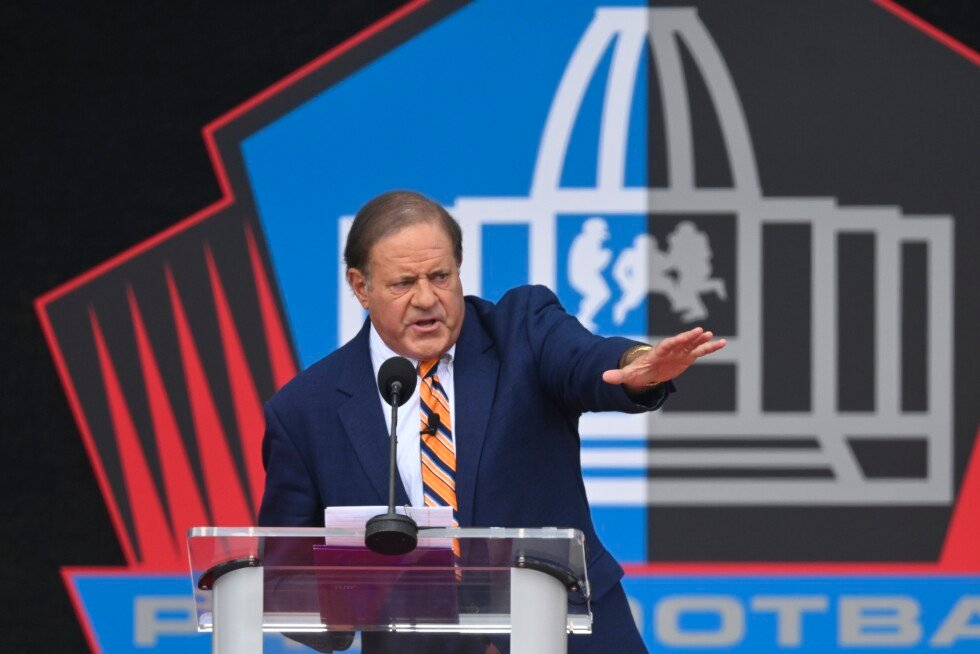
The retirement announcement of Chris Berman after nearly five decades at ESPN was framed publicly as a celebratory farewell. But behind the tributes and nostalgia lies a deeper story — one that reflects broader structural change inside sports media, shifting economics in broadcasting, and the quiet transformation of ESPN’s NFL strategy.
Berman’s departure is not just the exit of a legendary voice. It marks a calculated pivot inside a network navigating cord-cutting, streaming expansion, and generational transition.
The Strategic Timing Behind the Announcement
While Berman will remain through the 2029 NFL season, insiders in Bristol describe the timeline as deliberate. The extended runway gives ESPN:
- Time to gradually redistribute high-profile studio roles
- Space to build audience comfort with newer on-air talent
- Flexibility to redesign NFL studio programming for a streaming-first future
ESPN is in the middle of accelerating its direct-to-consumer platform strategy. Executives understand that legacy personalities built cable dominance — but streaming audiences behave differently. Personality still matters, but format speed, social clip integration, and multi-platform engagement now drive value.
Berman represents the apex of the “appointment television” era. ESPN’s challenge is transitioning to an “on-demand dominance” model.
The Salary Factor and Contract Realities
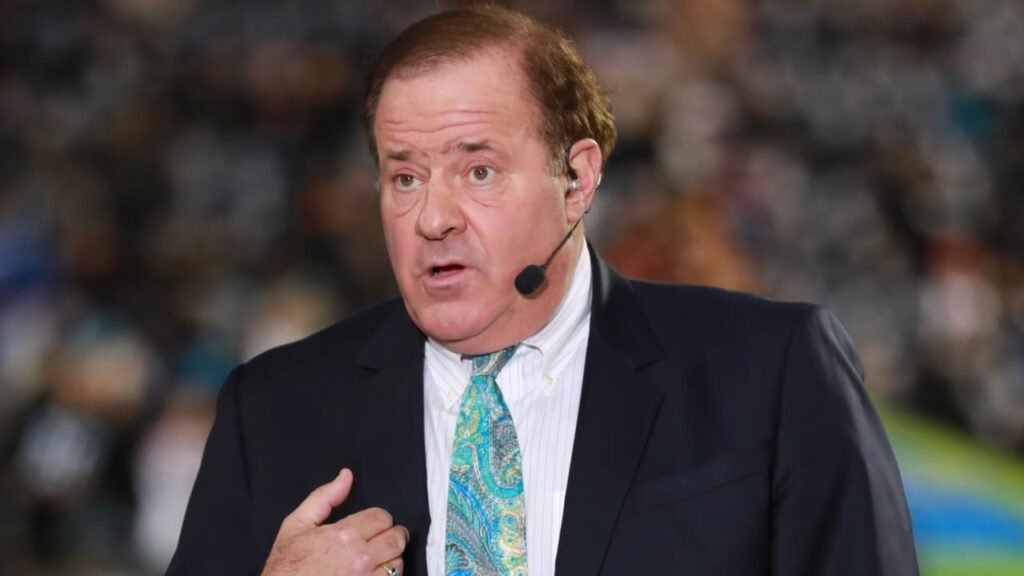
Though financial terms were never disclosed publicly, industry analysts note that long-tenured anchors like Berman command premium compensation packages tied to legacy contracts negotiated during peak cable revenue years.
As subscriber numbers across traditional cable decline nationwide, networks have quietly rebalanced talent spending. The retirement timing aligns with ESPN’s broader recalibration of high-cost veteran deals in favor of flexible, digital-ready contracts.
This isn’t about performance — it’s about economics.
The Cultural Divide Inside ESPN
Behind the scenes, ESPN has undergone a generational shift. Younger producers and digital executives now shape content strategy more than ever before. The tone of sports coverage has evolved:
- Faster highlight turnover
- Analytics-heavy breakdowns
- Short-form social video emphasis
- Cross-platform integration
Berman’s theatrical, booming delivery defined an era when fans waited all day for NFL PrimeTime. Today, fans see highlights within seconds on mobile apps.
Some inside ESPN privately acknowledge that maintaining a legacy style in a TikTok-era sports ecosystem required careful balancing. The retirement allows that transition to accelerate without appearing abrupt.
NFL Rights and the Bigger Picture
Another under-discussed element: NFL broadcast rights economics.
ESPN’s long-term agreements with the league are more expensive than ever. The network must justify massive rights fees with studio shows, betting integrations, digital packages, and exclusive content layers.
Modern NFL coverage now blends:
- Gambling data integration
- Real-time advanced metrics
- Interactive streaming overlays
- Social engagement dashboards
Berman’s legacy role — centered on recap storytelling — belongs to a different consumption cycle.
The future is predictive, interactive, and data-driven.
Influence on Generations of Broadcasters
Less talked about is how deeply Berman influenced internal talent pipelines. Many current ESPN anchors studied his rhythm, cadence, and phrasing patterns. Some executives even refer to an unofficial “Berman cadence” that shaped highlight narration structure for decades.
His departure removes not just a host — but a stylistic anchor point.
Expect subtle tonal changes in NFL studio shows over the next three years.
The Succession Plan (Quietly in Motion)
ESPN is unlikely to announce a single “replacement.” Instead, industry watchers expect a multi-host rotation system that mirrors how modern sports audiences consume content.
Possible changes include:
- Expanded analyst-driven panels
- Increased former-player integration
- Hybrid studio-digital simulcasts
- Greater crossover between betting shows and traditional coverage
Rather than replacing Berman, ESPN appears poised to dissolve the singular-anchor model altogether.
Emotional Weight Inside the Network
Sources inside Bristol describe the announcement as bittersweet. Berman is one of the last original ESPN figures still actively shaping NFL coverage. His retirement symbolically closes the founding chapter of the network.
When he joined in 1979, ESPN was an experiment. Today, it is a global media engine valued in the billions.
Few broadcasters can claim to have grown alongside a network from infancy to industry dominance.
A Broader Industry Signal
Berman’s retirement may signal something larger across American sports media: the sunset of the personality-driven cable titan era.
The next decade will likely feature:
- Shorter contracts
- Platform-fluid talent roles
- Data-heavy presentation formats
- Cross-media personalities rather than network lifers
Longevity like Berman’s may never be replicated.
The Final Stretch
With three more NFL seasons remaining before his farewell, ESPN has time to stage tributes, special programming, and likely a final prime-time sendoff.
But beyond the celebrations, the deeper reality is clear:
Chris Berman’s retirement is not just a personal milestone — it is a structural turning point in American sports broadcasting.
relacioned : https://futnews24.com/legendary-nfl-broadcaster-chris-berman-confirms-full-retirement-from-espn/